Women Who Protect New Mexico
An Honoring of the Red Water Pond Road Community’s Battle Against Uranium Contamination
By Virginia Necochea
“Treat the Earth well: It was not given to you by your parents, it was loaned to you by your children. We do not inherit the Earth from our Ancestors, we borrow it from our Children.”
Over the past few years, I’ve had the honor and privilege to know and work with Edith Hood and Teracita Keyanna - women with generational roots that run deep in the Red Water Pond Road community, a historic Diné village located in northwest New Mexico or what is the southeast part of the Navajo Nation.
For years Edith and Teracita have been fighting to protect their families and community from continued environmental degradation and harm stemming from the toxic legacy of uranium contamination caused by extractive mining that forever changed their community, their lives and their traditions.
This account aims to highlight the Red Water Pond Road’s ongoing battle against uranium contamination and to especially uplift the relentless commitment of two women warriors who have dedicated much of their lives to calling attention to the egregious harms committed by the US government and industry against Native people in northwest New Mexico.
It is with much care, love, and respect that I share this story, not on behalf of the people who are at the frontline, but as an individual who has had the privilege of working with them and who also exists to protect our sacred Mother Earth and to be of service to community.
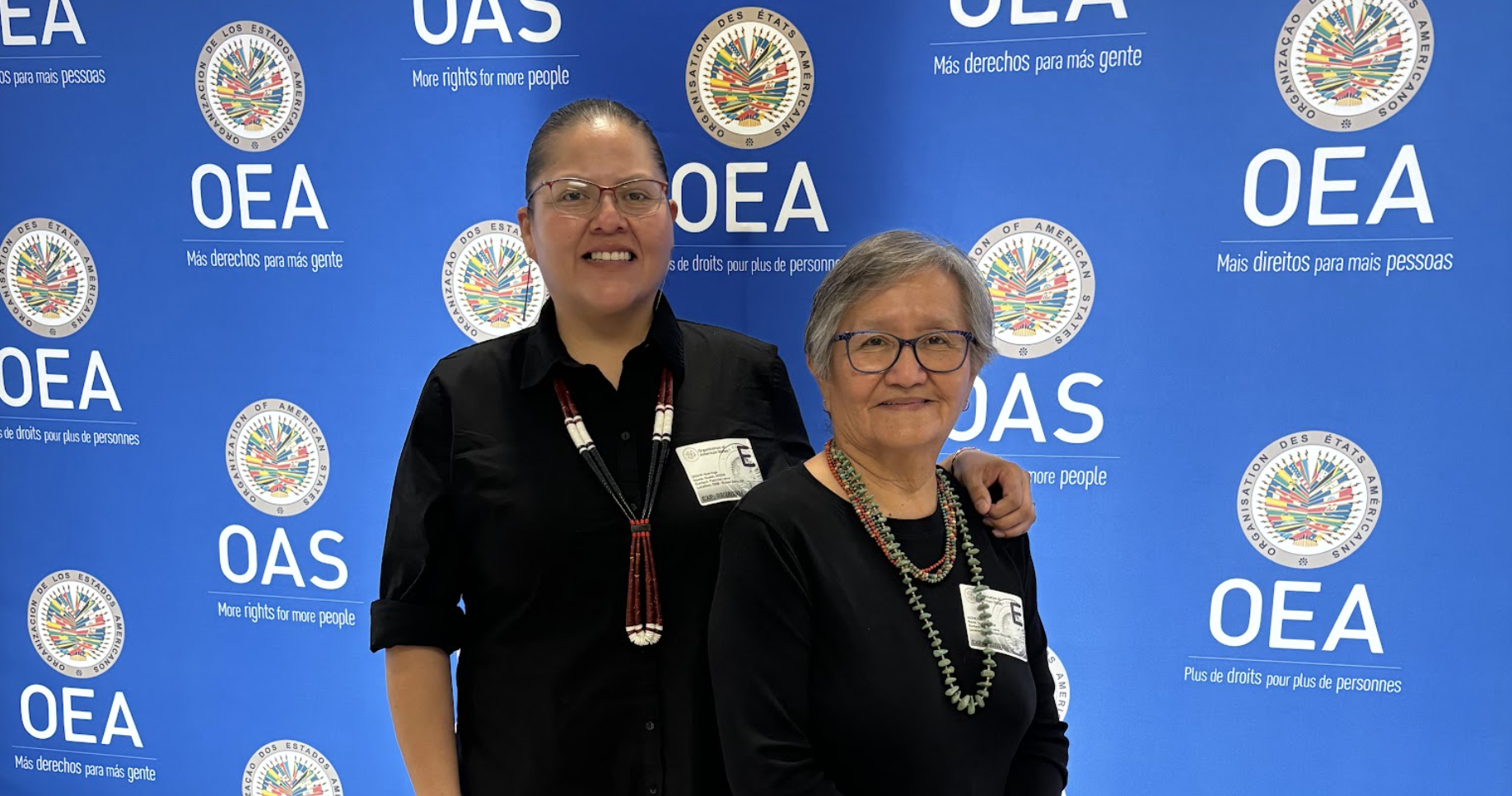
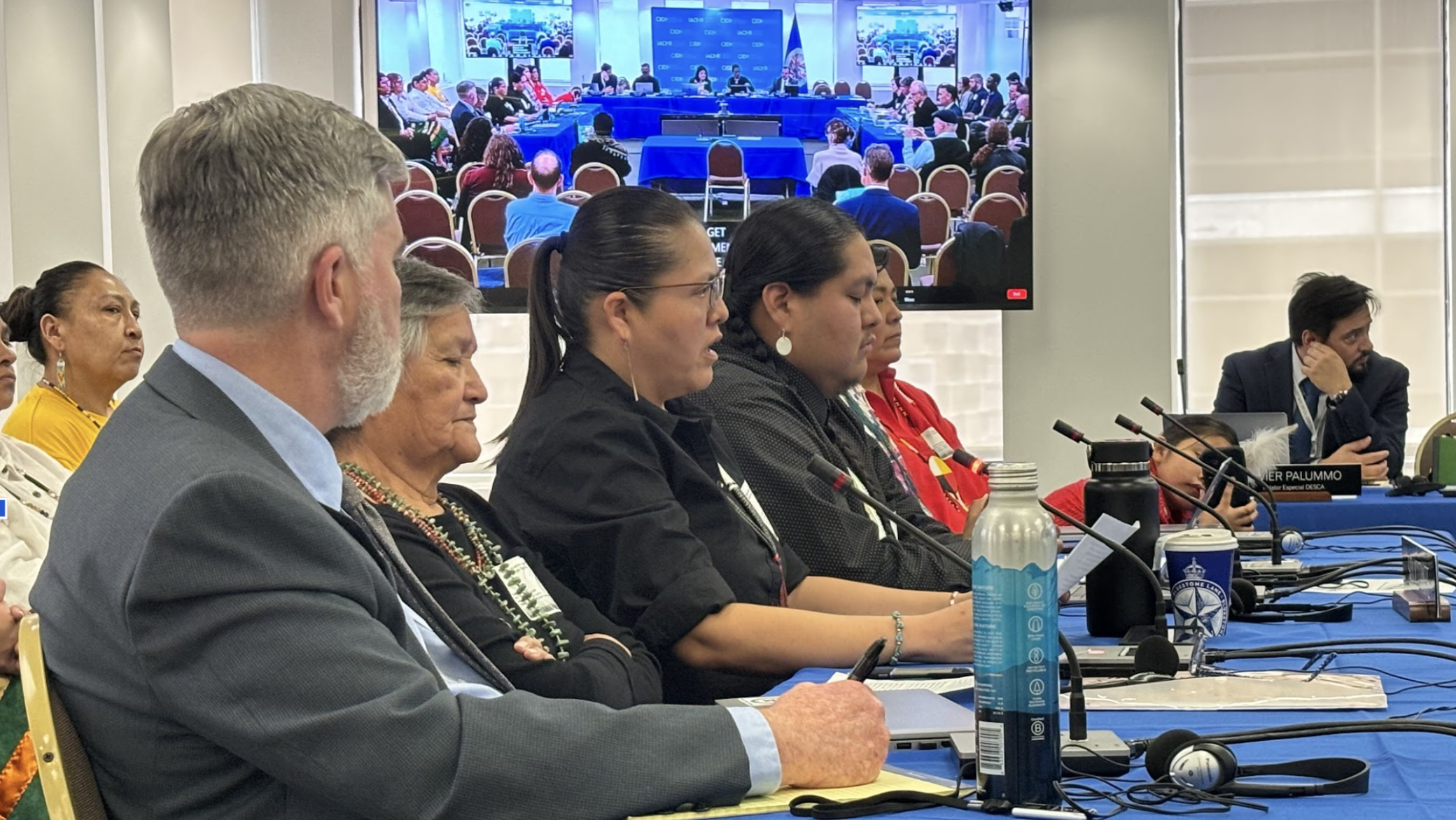
Teracita Keyanna and Edith Hood at the IACHR Hearing on Uranium, Washington D.C., February 28, 2024
Background and history
The Red Water Pond Road community is a Diné (Navajo) village located in Northwest New Mexico. For decades the small community, consisting of a few families, lived peacefully and focused on its long history of grazing. But, in the 1950s, the community and the lives of the families who called Red Water Pond Road home were forever changed by the extractive uranium mining industry that was strategically placed in their community.
Two large mines in the Church Rock area stored tailings in this valley with many of the community members working in the mines without sufficient (or any) information about the hazards of uranium exposure. The residents of Red Water Pond Road lived, worked, played, and prayed amidst the piles of waste. Water from the mines flowed through the community on a regular basis leaving dangerous contaminants behind. Over the years, the valley land was permanently altered as it was scraped and eroded through disposal and remediation efforts.
Because of the contamination of their community, elders petitioned the U.S. Environmental Protection Agency (EPA) to move their families to a neighboring mesa top, Standing Black Tree Mesa but the community’s pleas and petitions were dismissed and denied. Despite the community’s multiple requests, the EPA refused to relocate families to a safe, culturally-appropriate location citing the lack of water and power.
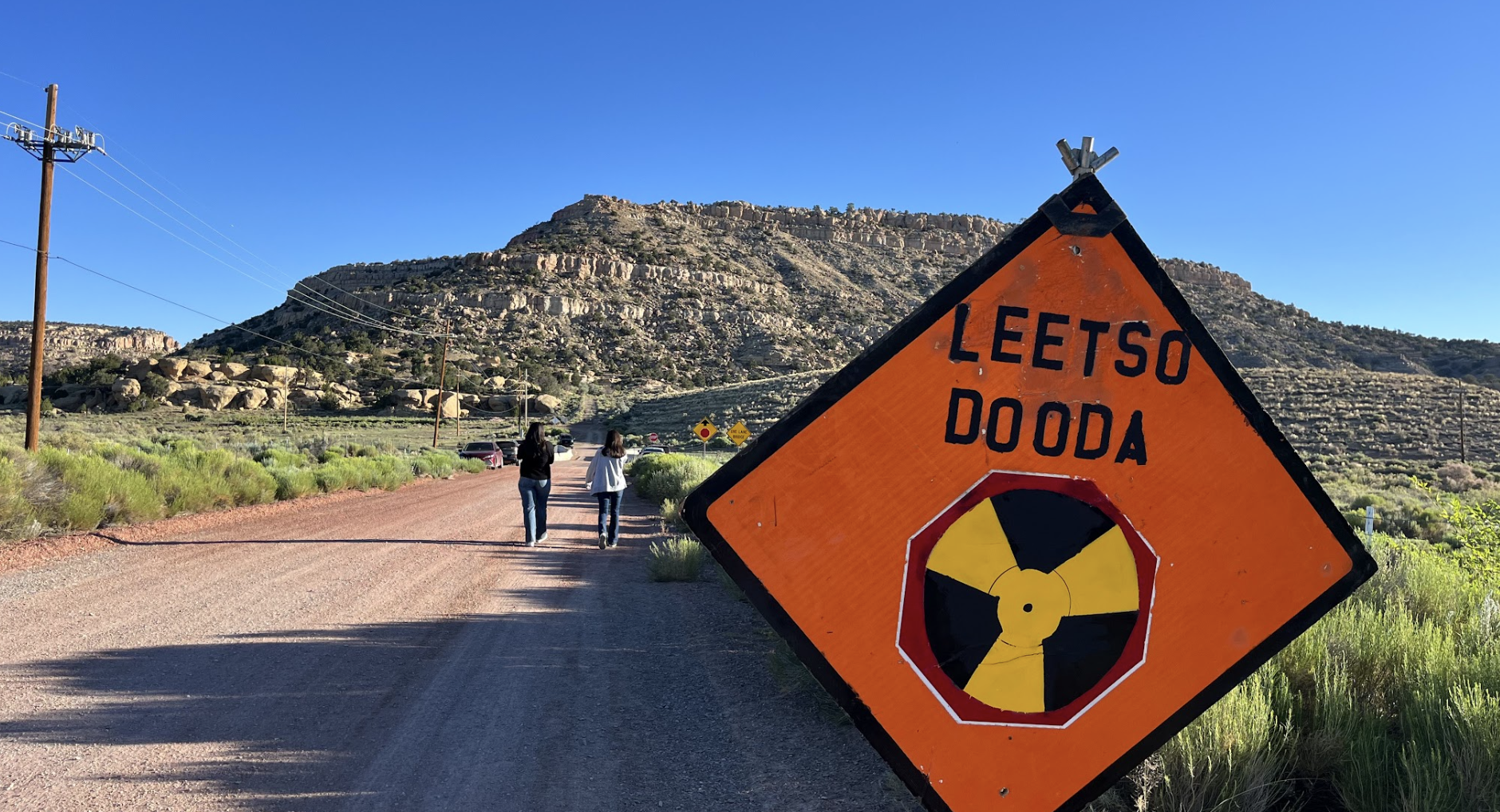
To this day, the Red Water Pond Road community is surrounded by the shadow of three abandoned Cold War-era uranium mine and mill waste sites. In 2007, six inches of radioactive dirt in residents’ yards were scraped up and hauled away, but to date residents still deal with radioactive air emissions and water pollution.
Courageous Women who Protect Mother Earth
Edith Hood
Edith Hood grew up in the Red Water Pond Road village. Her family’s economic vitality and cultural traditions were connected to sheep herding. Edith remembers drillers arriving when she was just a child, but the community did not know and was not informed on what was happening. Soon after, the private mining companies came in. Edith shares that no one told the families what was really going on. Families were purposely left in the dark, as has been experienced by many other Native/Indigenous people dealing with extractive mining in their communities.
After uranium mining operations began, the Red Water Pond Road community did not know they were living near and in contaminated areas. Residents asked the Navajo Nation and others to look into these mining issues, but no one listened at the time. Although the mining company closed in 1983, the devastation remains. Leakage from the ground caused by uranium mining has forever contaminated the land and the water in Red Water Pond Road and beyond.
“I hope they can clean up what they did, but I know it’s not going to go back to a pristine land. We could go anywhere with our sheep without being afraid of what could be there. With the signing of a piece of paper by the Navajo Nation, everything was changed. I want to have our people come back and that children can laugh and play the way they used to.”
Although contamination is currently being monitored by the EPA, contamination continues and is unfortunately migrating. Since uranium mining began, even after mines were shuttered in the 1980s, the health and well-being of the community remains impacted and changed. A Native community, who depend on the water and land for their livelihoods that are so intertwined with cultural practices, can no longer gather herbs for their families, ceremonies, and prayers because the soil is contaminated. Moreover, the practice of sheep-herding and maintaining livestock is no longer part of the community because of the contamination of the soil and limited water. This in turn has impacted the economic way of life for the entire community.
The lasting impacts and harm caused by the uranium industry remain largely unknown to New Mexicans and the U.S. in general. It has impacted and harmed the Red Water Pond Road community as a whole, from an economic standpoint to traditions, culture, and ways of life.
“When families pray to the east in the morning, what they see is a legacy of devastation left behind, it feels as if they are praying to the [uranium] waste piles. It has impacted the community’s entire life and has taken away our human rights.”
Teracita Keyanna
Teracita Keyanna’s entire life has been forever marked by the toxic legacy of uranium mining waste left behind after mining operations were shuttered in the 1980s. Teracita’s home and roots belong to the Red Water Pond Road. She was raised by Katherine Duncan, her paternal grandmother who worked at the Kerr McGee uranium mine and whose health was negatively impacted by exposure to uranium.
Terry’s life and that of her family have been forever harmed by uranium mining. Not only did her grandmother ultimately pass away from pulmonary fibrosis caused by uranium exposure, but other family members' health have suffered as well, including that of her own children.
“I moved away from my home to protect my children. My son was born with a hole in his heart and my youngest daughter keeps getting nodules around her ear and by her biceps on her arms. And every time we have it removed, we have to send them to pathology and make sure that it's benign, it’s something that's just truly terrifying… And sometimes we just have to roll with it and hope for the best.”
Terry has been an instrumental part and leader of the Red Water Pond Road Community Association (RWPRCA). Much of her work over the years has focused on calling attention to the devastating legacy of uranium mining on Diné communities and especially in advocacy efforts to hold governmental agencies and industries accountable for the devastation they allowed and left behind.
Both Edith and Terry, aunt and niece, are women who fiercely protect and care for Mother Earth, their families, their communities, their traditions and who will continue to fight for the justice their community deserves. They are women who lead with courage and who demonstrate and live by the sacred connection to land, water, and tradition.
“We’re down and we’ve been down and the only place to go is up.”
Historic Hearing in front of the Inter-American Commission on Human Rights
On February 28, 2024, I had the opportunity to travel to Washington D.C. to witness Edith and Terry provide powerful testimony in front of the Inter American Commission on Human Rights (IACHR) on how U.S. uranium exploitation policies have resulted in human rights abuses in their Diné community and in other Indigenous communities across the country.
This was a historic moment because it was the first time the IACHR held a thematic hearing exclusively addressing the United States' past and present policies on uranium exploitation and its impact on Indigenous peoples' human rights.
The following are the complete and moving testimonies provided by Edith and Terry directed to the IACHR commissioners as government officials were forced to listen to the community’s accounts of harm, negligence, and violence committed by the US upon Native communities.
Edith’s Testimony
Nahasdzáán Shima is the name we give Mother Earth in our prayers. She provides all our basic needs to live—air, water, soil, light—and more important, it is our shelter, our home. As Diné people, we are tied to the land in our daily lives. Our concept of hózhó is constant in our lives. It means to live in balance, beauty, and harmony.
Where I'm from, the place we call Red Water Pond Road Community. The name Red Water Pond is the name of the road that leads to that area west of the community. We grew up with names of our community such as “Where the Meadows Meet” or “Red Point Mesa,” all in Navajo geographic terms.
Our community is next to the #1 Superfund site on Navajo Nation, the Northeast Church Rock Mine. The #3 site is the Quivira Churchrock 1 Mine, which I can see from my kitchen window. It is still yet to be cleaned up to reduce the risk of exposure. Around the corner is the place of the 1979 Church Rock Uranium Tailings Spill—the largest spill of radioactive waste in U.S. history. Through the years, after the mining left, we asked to get the area cleaned up, but to deaf ears. Our community people participated in community-led pollution sampling in 2003, which was being done by the Churchrock Uranium Monitoring Project. The findings from that project finally got the Navajo Nation EPA and U.S. EPA’s attention. But as it is, it is taking a lot of time to do a cleanup.
Growing up in the Red Water Pond community, I remember riding horses and grazing our livestock. When the mines came in the 1960s, and then closed down after 20 years, our community was forever changed. People began to leave after we discovered contamination in the community because we were afraid for the health of our children, and for our health. Only two families of the original 11 families still live in the Red Water Pond community because of the supposedly “pending” cleanup.
Going back into history, the government established uranium mines in isolated areas, with language barriers, no understanding or translation of what uranium is or what radiation is. How do you explain what you can't see, touch or smell? The government was aware of the risks and the dangers, but failed and neglected to inform our people. As it is, the Federal Government puts its Indigenous people at risk, never returning to check on the people and the land.
Terry’s Testimony
My name is Teracita Keyanna from the Red Water Pond Road Community on the Navajo Nation.
I fight for my community, my family, and my children's future.
I was raised by my paternal grandmother, the late Katherine Duncan, who worked at the Kerr McGee uranium mine, and later passed from pulmonary fibrosis caused by her uranium exposure.
She taught me all that she could of our language, traditional values, and culture. The cultural teachings I know from her are just the tip of the iceberg of the longstanding knowledge our Native peoples have as first inhabitants of this land.
My aunts and uncles continue to teach me about these values, but a lot of this knowledge has been lost due to the extractive uranium industry. After prolonged exposure to uranium in the home I grew up in, which caused me and my family significant health problems such as cancer, autoimmune issues, skin issues, liver and kidney diseases, and even learning delays in infants and toddlers, I was forced to relocate off reservation to Gallup, New Mexico. I knew the move would provide my children with the safest environment (free from uranium exposure), but when you move off of your tribal lands, your ability to practice your language and culture becomes more and more challenging.
We stay connected with family and regularly engage in volunteer mutual-aid work to support our community and elders in Red Water Pond. But it continues to be a challenge for my children to speak their language and practice their traditions the way we would have if we could have safely stayed on our homelands.
The uranium mining industry has not only stripped the land of its natural resources, but has also poisoned our ground water and has left radioactive materials and open mines in our community. Extractive mining, and the United States government’s neglect of its responsibility to clean up and close these mines, has harmed the land, poisoned our family and community, and continues to cause harm by forcing us to relocate outside of our tribal community and lose touch with our language and culture.
We want our voices to be heard and understood. Our community and people deserve justice not only from the extractive industry, but from the government entities that were involved in the decision to mine and mill these Lands. Our children’s rights to a clean environment have already been affected. Our children's freedom to practice their culture has been impacted before they were born.
Red Water Pond Road Community Association
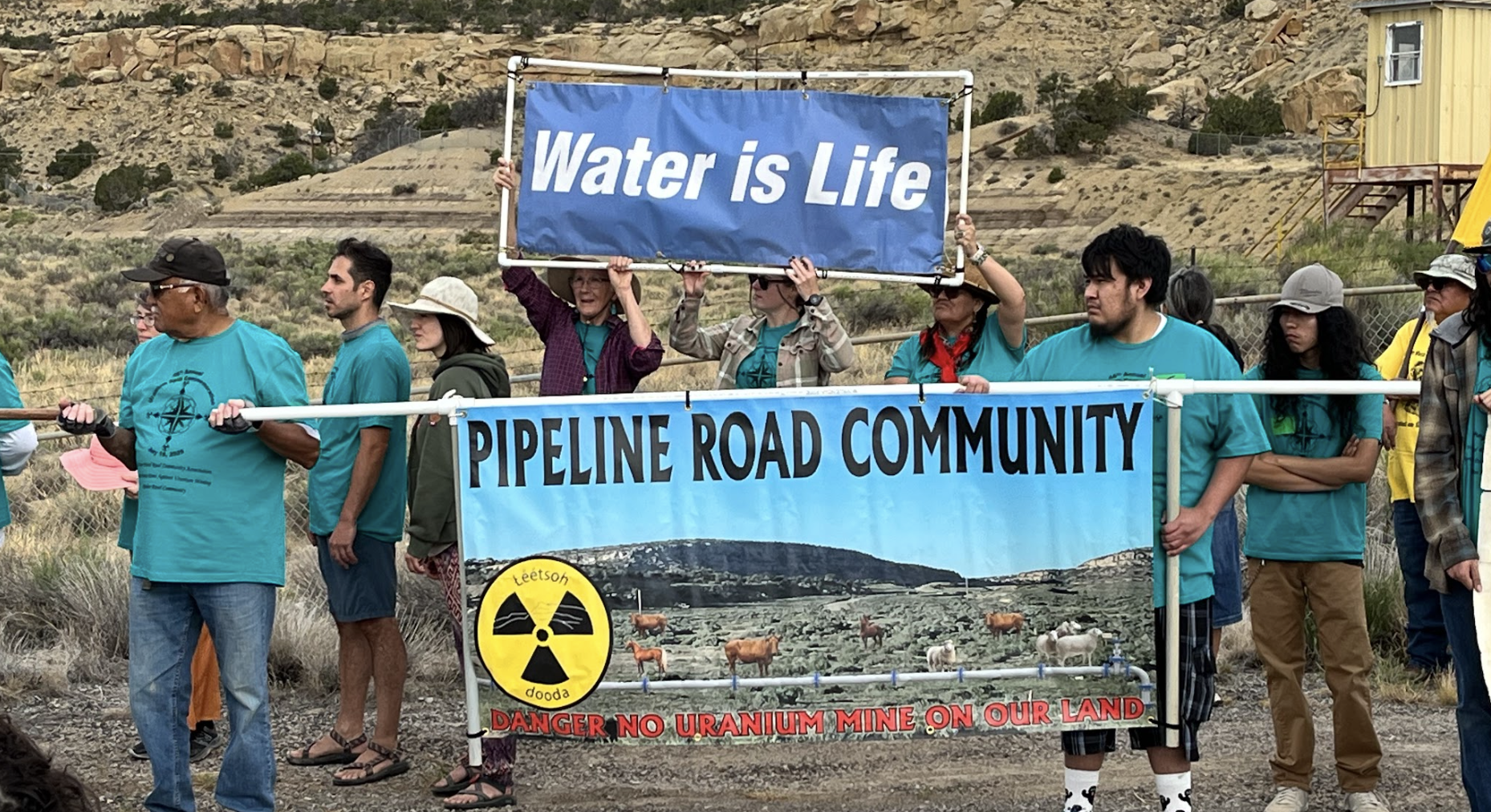
Red Water Pond Road Community Association (RWPRCA) was created by a grassroots group of Diné families who experienced and lived with the impacts of uranium mining and milling in the Church Rock mining area since the 1960s. RWPRCA’s mission is to restore the land and water contaminated by uranium mining, improve the health of community members, and protect and preserve the natural and cultural environment in which they live. Two members and leaders of RWPRCA are Edith Hood and Teracita Keyanna, both with deep roots and generational ties to Red Water Pond Road.
“The Red Water Pond Road Community has been trying to get our homeland cleaned up from uranium mining and its waste after learning the community has been contaminated all these years.”
Church Rock Uranium Spill Annual Commemoration
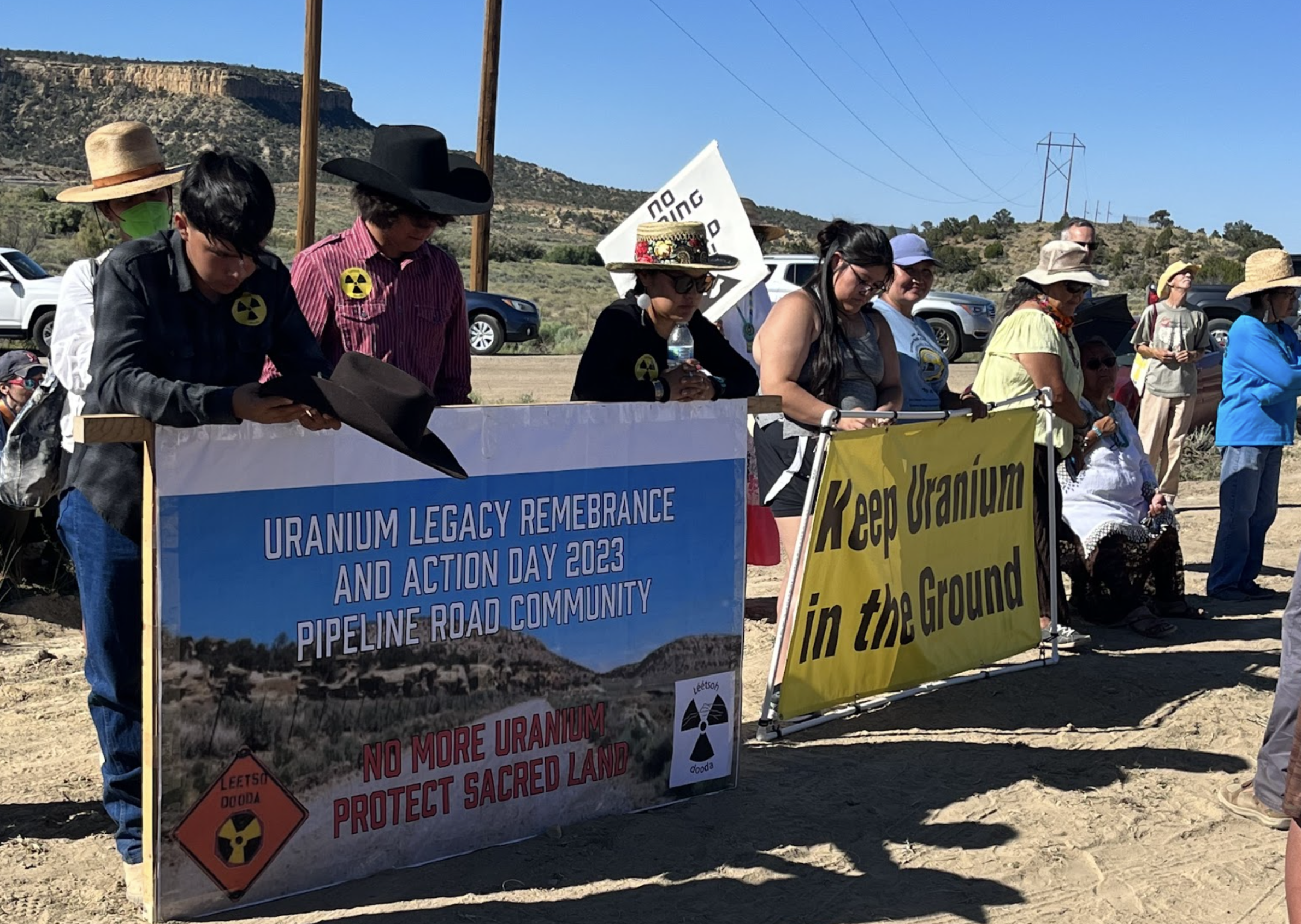
Every year, on the Saturday closest to the July 16 anniversary, the Church Rock Uranium Spill is remembered by community members and allies with a walk to the site where 93 million gallons of radioactive uranium mill tailings were released when an earthen dam broke on July 16, 1979.
The commemoration is an opportunity to join the community and learn about the long-term impacts from the uranium spill and other ways uranium mining and milling have affected the health and environment of the Red Water Pond Road Community and others in New Mexico and beyond.
The Red Water Pond Road Community Association plays a lead role in organizing the commemoration each year. It includes prayer, a walk, speakers, and a community gathering.